







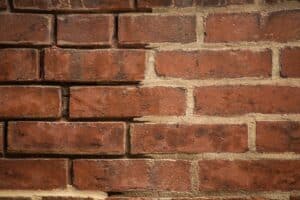
Tuckpointing old brick requires lime mortar to preserve the authenticity and structural integrity of historic brick homes in DC.
A stronger mortar is not automatically a better mortar. In fact, on a historic brick wall, choosing the harder material can put the original brick at greater risk. The mortar and brick were meant to work together, and the wrong combination can shift the wear onto the very masonry you are trying to preserve.
For lime mortar vs. Portland cement, that compatibility was part of the original construction. Portland cement changed modern masonry and became a standard choice for new construction, but its properties are not necessarily suited to an older DC rowhouse. The difference between these two materials is useful to know before someone starts grinding out the joints and filling them again.
What Is Lime Mortar?
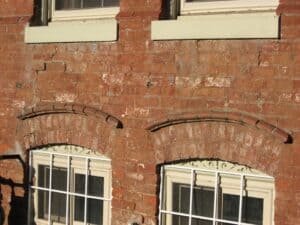
Lime mortar was a familiar choice for historic brick construction, helping form the joints seen throughout façades like this one.
Lime mortar is a masonry mortar made with lime as its primary binder, along with aggregate such as sand and water. It is what holds the mixture together after it is placed in the joint, with the mortar hardening through carbonation, hydraulic reactions, or both depending on the type used.
Lime-based mortars were used between brick and stone for centuries, long before Portland cement became common. Their relatively soft, permeable character suited traditional masonry assemblies, allowing the mortar to accommodate some movement and moisture. Those qualities made lime a practical choice for the joints between individual masonry units, where the mortar needed to work with the surrounding brick rather than overpower it.
What Is Portland Cement Mortar?
Portland cement is a much newer masonry binder than lime. Patented in England in 1824, it became increasingly common during the 19th and 20th centuries as construction practices and masonry materials changed. Mortars containing Portland cement grew to be the standard for many types of modern construction, although the transition was not immediate or uniform.
Portland cement mortar sets faster and generally develops greater hardness and lower permeability than traditional lime mortar. Its quick setting time, greater strength, and consistency made it well suited to the increasingly standardized construction methods that developed alongside modern masonry. The same properties that make Portland cement useful in modern construction can make it a poor match for softer historic brick.
Why Do Lime Mortar and Portland Cement Behave Differently?
A masonry wall is not completely stationary. Brick and mortar respond to changes in temperature, moisture, and other forces, with small amounts of movement occurring within the assembly. Lime mortar can accommodate some of that movement because it is softer and more flexible than Portland cement. The joint absorbs some of the stress rather than transferring it directly into the brick.
Lime mortar also gives moisture a more permeable path through the masonry. Water within the wall can move through the mortar and dry as conditions change. Portland cement restricts that movement, leaving moisture with fewer paths through the wall. On historic brick, the combination of a rigid joint and restricted moisture movement affects where stress and deterioration occur.
What Happens When Portland Cement Is Used on Historic Brick?
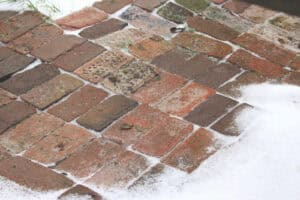
Mortar joints help bind individual bricks into a masonry surface, with their condition affecting how the surrounding brickwork handles moisture and weather.
When an incompatible mortar restricts moisture movement, the brick can retain moisture longer than the wall was designed to handle. That moisture contributes to deterioration within the brick, especially when repeated wetting and drying or other environmental conditions put additional strain on the masonry.
The problem becomes more serious when the mortar is harder than the surrounding brick. A joint that was meant to absorb wear can instead hold the masonry rigidly in place, shifting the burden onto the brick itself. Cracking, surface deterioration, and spalling can follow, with the outer face of the brick eventually breaking away. Mortar is meant to be the sacrificial part of the assembly, but an incompatible Portland cement repair reverses that relationship and leaves the historic brick taking the damage.
How Can You Identify Incompatible Prior Repairs?
Older brickwork often carries evidence of repairs that happened decades after the original construction. A repointed section may have mortar joints that are smoother, wider, or more uniform than the surrounding work, creating a noticeable change across the façade. Mortar that spills onto the faces of the bricks or sits above the surrounding joint can also signal a later application.
Changes in tooling, color, texture, and joint width often reveal where one repair campaign ends and the original masonry begins, even when the difference is subtle. Those visual signs point to areas that need further investigation, but appearance alone cannot identify the mortar’s ingredients. A professional assessment would involve examining the existing material or analyzing a sample to establish whether Portland cement is present.
What Does Proper Mortar Specification Involve?
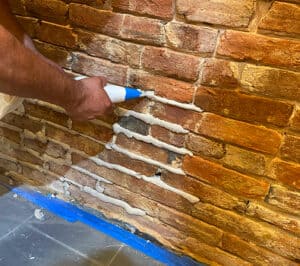
A worker restoring a historic brick wall with mortar.
There is no universal mortar recipe for historic brick. The existing mortar, brick, and previous repairs all provide information about what belongs in the wall. Color, aggregate, texture, strength, and permeability help shape the specification, along with the building’s age and exposure.
When the existing material is difficult to identify, mortar analysis can provide a closer read of its composition. The results are interpreted alongside the masonry itself to develop a replacement mortar that suits the wall rather than simply copying a formula from another historic building.
Why Is This a Contractor Selection Issue?
The mortar choice should come up before the estimate becomes a proposal. Ask what mortar the contractor intends to use, why they selected it, and what they observed in the existing joints. A response that jumps straight to a standard mix without accounting for the age and condition of the brick deserves scrutiny.
For a historic DC rowhouse, the right contractor should be comfortable explaining the reasoning behind the specification, not just naming a product. That conversation gives you a useful sense of whether the proposed work is based on the building in front of them or on a standard repair formula.
Lime Mortar vs. Portland Cement: What Your Brick Wall Needs
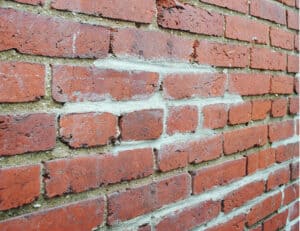
Mortar joints reveal how much material can influence the appearance and performance of a brick wall.
Mortar may be the quieter half of a brick wall, but choosing the wrong one can change how the entire assembly performs. That is why brick repair and historic masonry require careful attention to lime mortar vs. Portland cement. Once an older DC rowhouse has accumulated decades of repairs, that history becomes part of the restoration plan.
Renaissance Development brings that compatibility-focused approach to each project. If your home needs tuckpointing in Washington DC, we can evaluate the existing masonry and develop a repair scope based on what the building needs. Contact us for a free estimate to discuss your project.
Frequently Asked Questions
Why can’t Portland cement mortar be used on historic brick?
The difference between lime mortar vs. Portland cement matters because a cement-rich mortar can be too hard or impermeable for many historic brick walls. When the materials are poorly matched, deterioration might shift into the brick instead of the mortar joint.
How do I know if my DC rowhouse has had incompatible cement repairs?
Look for mortar joints that differ from the surrounding work in color, texture, width, or tooling. Cement-rich repairs may appear harder, smoother, or grayer, but appearance alone cannot confirm what is in the mortar.
Is lime mortar less durable than Portland cement?
Not when it is appropriate for the masonry. Lime mortar was used successfully for centuries, and some lime mortars can accommodate minor cracking through continued carbonation.
Does using lime mortar cost more?
It can, depending on the building and repair work involved. Historic masonry restoration may require more careful material selection and application than a standard repointing project, so pricing should be based on the actual conditions.
How does a masonry contractor determine the right mortar for a historic building?
The contractor should examine the existing mortar and brick, along with the building’s age, exposure, and repair history. Mortar analysis may also be appropriate when the existing material needs further identification.
Disclaimer: Every effort is made to ensure the accuracy of the information in this article. Please credit rendevdc.com when sharing and reposting.


