







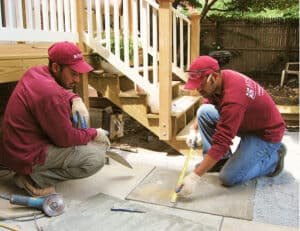
Choosing the right masonry contractor starts with knowing who will handle the work and how they approach your building.
When you need a masonry contractor in Washington DC, finding companies to call is rarely the difficult part. The harder question is whether the contractor understands the building they are being asked to repair. After more than 20 years working on DC rowhouses, we have seen how easily a contractor can approach historic brick as though it were ordinary masonry, overlooking the age, condition, and materials already present in the wall.
That experience has also shown us why the finished appearance is not always a reliable measure of the work. A repair may look sound at first and still create problems later when the wrong mortar, an unsuitable repair method, or a superficial fix does not account for how the existing masonry behaves. Those are the distinctions we encourage owners to investigate before they hire someone to work on their building.
Why Historic Buildings Raise the Stakes
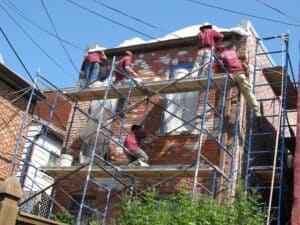
Restoring older brick often requires careful work at height, with the condition of the masonry guiding the work from the scaffold.
Historic brick does not respond well to repairs that ignore the materials already present in the wall. An incompatible mortar, overly aggressive removal, or patch that simply covers deteriorated masonry may leave the immediate defect looking resolved while setting up a different problem. Deterioration from an inappropriate repair may develop gradually, with moisture and repeated weather exposure contributing to damage that becomes more apparent months or years later.
We have encountered the results of this kind of work repeatedly on DC rowhouses, including masonry that needed to be repaired again after an earlier contractor addressed only the most obvious defect. The longer-term condition of the brick depends in part on what was done during that first repair, which makes the material choices, methods, and assessment of the existing masonry important before work begins.
What Actually Qualifies a Contractor for Historic Masonry Work
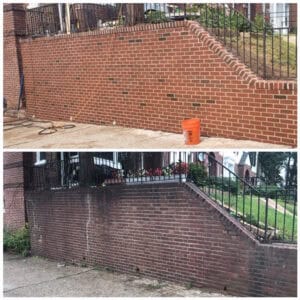
Comparable historic masonry projects show the kind of experience a contractor brings to work on older brick and restoration projects.
The strongest indication of relevant experience is a portfolio that looks familiar for the right reasons. Projects involving historic brick, lime-based mortar, and buildings of a similar age or construction give you a better sense of whether a company knows how to work with older masonry. Ask to see comparable work and speak with references when possible, rather than assuming a long history in general masonry translates directly to historic restoration.
Alongside that project history, the basic qualifications of the business still matter when you are deciding who to hire. A reputable company will have the appropriate DC license and required insurance, along with a written proposal that spells out the planned work and materials. That proposal should leave enough detail for you to understand what you are hiring the company to do, and the contractor needs to be willing to walk through the reasoning behind the proposed approach before you sign. Clear explanations of the work are just as useful as the price when you are deciding who will handle an older building.
Red Flags When Hiring a Masonry Contractor
A contractor who gives you a price without visiting the property first has limited information about the condition and extent of the work. Historic masonry needs to be evaluated in place, particularly when the scope involves deteriorated mortar, damaged brick, or moisture concerns. Proposals that simply say “repointing” or “brick repair” without identifying the materials, methods, or areas included deserve caution as well. The contractor should be able to tell you what mortar is being proposed and why it is compatible with the existing masonry, rather than treating the material as an afterthought.
Be cautious when sealing or waterproofing is presented as the primary answer to a masonry problem without first determining the source of the moisture. Water-repellent treatments have specific applications and are not a substitute for addressing underlying conditions. Pressure to sign before you have had time to review the scope is another reason to step back, especially alongside an unusually low bid that leaves out basic details. The same applies when a contractor refers to “cement” without naming the specific material or explaining why it is appropriate for your building. Historic masonry requires more precise answers than a price and a few general terms.
Questions to Ask Before Hiring a Masonry Contractor
- What mortar will you use, and why is it compatible with my building?
A useful answer names the mortar and connects its properties to the masonry already in place. Vague references to “matching” or “standard” mortar do not tell you enough about what will actually be installed. - How much of the existing mortar will you remove?
Mortar removal is part of the preparation for repointing, and the amount needed varies with the condition of the joints. The contractor’s explanation should account for the existing brick rather than treating every joint as though it requires the same treatment. - Have you worked on buildings from this era before?
Ask about the age and type of properties the company has handled, especially when your home is a historic rowhouse. Familiarity with older construction means the contractor has encountered conditions that do not appear on every masonry project. - Do you obtain permits when required for this type of work?
Permit and preservation requirements depend on the property and scope. Find out early who will handle that process so the project does not move forward on the assumption that approvals are unnecessary. - Can you show me examples of similar historic restoration projects?
Completed projects let you see the contractor’s work in context. Pay attention to whether the examples involve the kind of brick, mortar work, and building age found at your property.
What the Estimate Process Should Look Like

A clear conversation between the contractor and property owner is part of a well-defined estimate process.
The estimate is one of the first opportunities to see how a contractor has evaluated the work. A site visit lets the company look at the masonry firsthand, ask questions about the building, and account for conditions that photographs or a brief description cannot capture. The written proposal that follows needs to turn those observations into a defined scope, with enough information for you to know what the contractor is recommending and what the price covers. You also want time to review that information and ask questions before making a commitment.
Renaissance Development approaches estimates with that same emphasis on evaluating the property before discussing the work. We evaluate the masonry on site, develop a written proposal based on those findings, and discuss the scope with the owner before the project moves forward. Our estimates are provided without pressure to sign, so the proposal serves as a basis for an informed decision rather than a sales deadline.
What to Know Before Hiring a Masonry Contractor in Washington DC
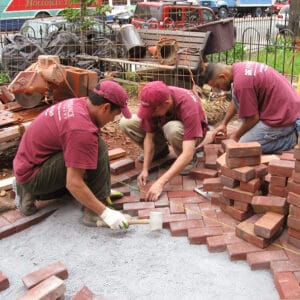
Workers laying bricks during historic masonry and tuckpointing project by Renaissance Development.
The contractor you hire becomes part of the building’s repair history, which makes the choice worth considering alongside the number on the estimate. A thoughtful approach at the outset can help protect the brick, preserve the character of the building, and keep the work grounded in what the masonry actually requires. That is why choosing a masonry contractor in Washington DC is an important decision for the long-term care of an older home.
Renaissance Development works with historic masonry throughout Washington, DC, from repointing and brick repair to larger restoration projects. Visit our masonry services to see how we approach this work, or request a free estimate to discuss your property and the project you are considering.
Frequently Asked Questions
How do I verify a masonry contractor in Washington DC is licensed?
DC contractors are required to hold the appropriate license for the work they perform. You can verify a contractor’s business license through the DC Department of Licensing and Consumer Protection (DLCP) and check whether the license is active. Ask the contractor for proof of insurance as well.
Why is getting three quotes not enough when hiring a masonry contractor for historic work?
Quotes can vary based on scope, materials, and the proposed approach. A lower price may reflect a narrower scope or different materials, so comparing the details of each proposal is more useful than comparing the totals alone.
What should a masonry proposal include?
A written proposal should clearly define the scope of work, identify the mortar type, describe preparation and mortar removal, address permit requirements when applicable, and specify any brick repair included in the project. The level of detail makes it clear what work the quoted price covers.
Is it a red flag if a contractor recommends sealing my historic brick?
It can be, particularly when a sealant is presented as the primary solution without first addressing the source of a moisture problem. Water-repellent treatments have specific applications, and the appropriate response depends on the condition and construction of the masonry. A contractor should be able to explain why a particular treatment is appropriate for your building.
How important are references for historic masonry work?
References are especially useful when they come from projects involving historic brick of a similar age and construction type. General masonry references from newer construction may not demonstrate the experience needed to work with older masonry and compatible materials.
Disclaimer: Every effort is made to ensure the accuracy of the information in this article. Please credit rendevdc.com when sharing and reposting.


