






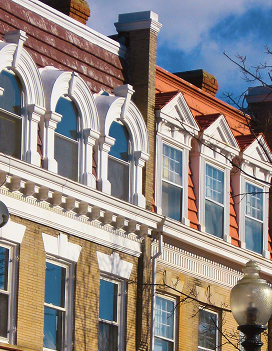
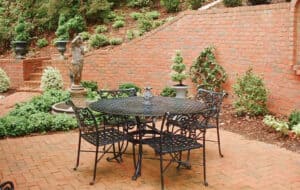
A well-planned brick patio creates a comfortable setting for gathering, dining, and enjoying the garden.
A patch of brick can change the way a DC rowhouse yard feels and functions. Suddenly there is a place for a table, a few chairs, a grill, or a quiet corner outside the back door. The patio itself may look straightforward once it is finished, but getting it there is where the real planning begins.
Brick patio installation in Washington DC involves more than choosing a brick and deciding on a pattern. The existing yard, the ground beneath it, water movement, access to the property, and the masonry already surrounding the space all affect how the project comes together. A thoughtful installation works through those details before construction begins, so the finished patio makes sense for the property as a whole.
Why Brick Patios Work Especially Well in DC

Brick paving makes sense in DC rowhouse yards, where the patio often shares its setting with existing historic masonry.
Brick already belongs to the visual vocabulary of Washington, DC’s historic rowhouses, which makes it a natural material to carry from the house into the yard. A brick patio can create continuity with existing masonry through its texture, scale, color, and pattern without requiring an exact match. That relationship can be especially effective in a rowhouse yard, where the patio, steps, garden walls, and rear façade are often viewed together.
Brick also has practical advantages as a paving material. Clay pavers are made for outdoor use and, with an appropriate base and drainage strategy, provide durable footing through seasonal weather changes. A brick patio can be incorporated into a deliberately designed permeable paving system, allowing water to move through the joints and underlying assembly. Once installed, routine cleaning and attention to joints and drainage generally keep the surface in good condition, although individual patios may require repairs as conditions change.
Types of Brick Patio Installations
Brick patios can be built with conventional brick, reclaimed brick, or purpose-made clay pavers, and each option has its own best application. Traditional brick may suit a patio when the material is appropriate for exterior paving and the desired result calls for the proportions and character associated with older masonry. Brick pavers are manufactured specifically for paving, making them a straightforward choice when consistent dimensions and paving performance are priorities.
Reclaimed brick takes a different approach by reusing salvaged masonry. It can be a good fit when the goal is to incorporate older material into the patio, particularly when its size, appearance, and condition work for the project. Not every salvaged brick is suitable for paving, however, so the material needs to be assessed rather than selected on appearance alone.
Design Considerations for DC Rowhouse Yards
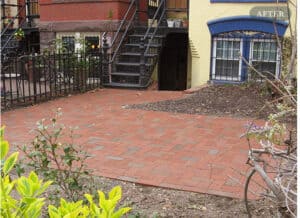
This patio works around an existing rowhouse setting, connecting the paved area with steps, landscaping, and outdoor access.
A rowhouse yard rarely starts with a blank slate. A narrow rear lot may already contain a set of steps, a walkway, garden walls, fencing, planting areas, or an existing paved surface. The patio has to occupy that same footprint without making the yard awkward to cross or crowding the elements that are already there. A compact layout can still accommodate seating and outdoor use, but the proportions and placement need to suit the space available.
The yard’s grade might influence the patio layout when it slopes toward a patio, house, walkway, or retaining wall. The finished paving needs to sit at an appropriate height while allowing rainwater to move through the site without collecting against the house or creating low spots across the patio. A retaining wall creates another layer of complexity because soil, drainage, and paving meet at the same edge. Steps and walkways also need clean transitions into the new surface, so the finished patio feels like a natural continuation of the yard rather than an isolated paved area.
What the Installation Process Involves
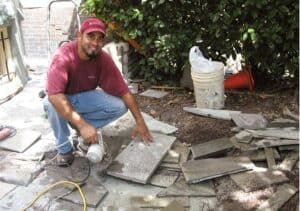
Preparing the ground is an essential part of building a patio that can handle everyday use and seasonal weather.
The finished patio may be made of brick, but much of the installation happens below the surface. Site preparation begins with removing the existing material and preparing the ground for the paving assembly. A suitable base is then constructed beneath the patio, with the thickness and materials depending on the soil, drainage conditions, paving system, and expected use. That foundation supports the finished surface and helps it remain stable as the ground experiences seasonal changes.
Material selection fits into that construction process rather than happening separately from it. The brick or clay paver needs to be appropriate for exterior paving and compatible with the selected installation method. Drainage is planned alongside these decisions, with the finished patio and underlying layers arranged to move water through or away from the paved area as the system requires. A permeable patio, for example, relies on specifically designed joints and aggregate layers rather than simply using bricks that allow some water through.
How Long Does a Brick Patio Last?
A brick patio can remain in service for decades, with individual bricks or sections replaced as needed rather than treating the entire patio as a disposable surface. That long service life is one reason brick continues to appear in older landscapes, where paving materials have remained functional through generations of use. Clay pavers themselves can have exceptionally long service lives when they are properly suited to the application.
Maintenance generally involves keeping the surface clean and watching for small changes rather than carrying out frequent treatments. Dirt, leaves, and plant growth can be cleared away as needed, while isolated bricks or joints may receive attention when they show wear. Winter time also calls for some care in DC, since certain deicing salts can damage masonry and contribute to deterioration.
Permits and DC Regulations
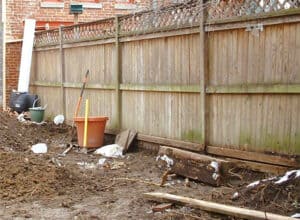
The approvals for a patio project can depend on the property, the work involved, and whether existing site features are being changed.
Permit requirements for a brick patio in Washington, DC depend on the property and the scope of the work. A replacement-in-kind patio outside a historic district may fall under an exemption, while work involving a retaining wall, public space, or exterior changes to a historic property can come with specific requirements. Checking the applicable DC requirements before construction begins helps clarify what approvals belong with the project.
What to Look for in a Contractor
A useful sign of experience is the quality of the conversation before work begins. Someone accustomed to DC rowhouse yards should be able to talk through access to the site, the existing hardscape, changes in grade, and the points where new paving will meet older masonry. You should come away understanding how those conditions will be handled, rather than hearing only which brick or pattern you can choose.
Material knowledge should come through in that same talk. Brick and clay pavers are not interchangeable simply because they can create a similar finished appearance. Their suitability depends on the application and paving system. A knowledgeable contractor should be able to explain why a particular material fits the project and how it is expected to perform after installation, which means a lot more than a list of materials on a company’s website.
Brick Patio Installation in Washington DC: A Better Fit for Rowhouse Yards

A well-maintained brick patio can remain a useful gathering space for years, with routine upkeep keeping the paving ready for everyday use.
A brick patio can change how a DC rowhouse yard is used, but there is more to it beneath the finished paving. The way it meets the house, handles rain, works around existing masonry, and fits the available space all matter when the patio is in daily use. Brick patio installation in Washington DC works best when those practical details are resolved alongside the design, rather than treated as problems to solve after the paving is chosen.
Renaissance Development works with older DC properties where patios have to coexist with existing steps, walls, walkways, grades, and historic masonry. Our free estimate gives you a way to discuss the space, the changes you have in mind, and what installation may involve.
Frequently Asked Questions
How long does a brick patio last in Washington DC?
A properly installed brick patio can last for decades. In brick patio installation in Washington DC, freeze-thaw cycles, drainage, and the condition of the base all affect long-term performance.
Can a brick patio be installed in a small DC rowhouse yard?
Yes. Compact rowhouse yards can accommodate patios when the layout works with existing steps, walkways, walls, planting areas, access points, and grade.
Does a brick patio require a permit in Washington DC?
Not necessarily. Requirements depend on the property and scope of work. Certain patios may be exempt, while projects involving retaining walls, public space, or historic properties may require specific approvals.
What is the difference between traditional brick and brick pavers for a patio?
Brick pavers are manufactured specifically for paving, while traditional brick may or may not be suitable for that application. Dimensions, thickness, material properties, and the installation system all factor into the choice.
Can reclaimed brick be used for a DC patio?
Yes, when the reclaimed material is suitable for exterior paving. Its condition, dimensions, durability, and intended use should be evaluated before installation.
Disclaimer: Every effort is made to ensure the accuracy of the information in this article. Please credit rendevdc.com when sharing and reposting.


