






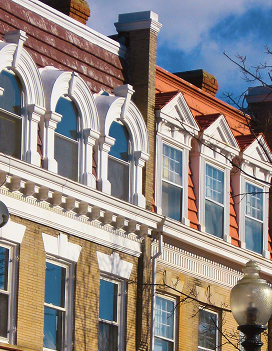
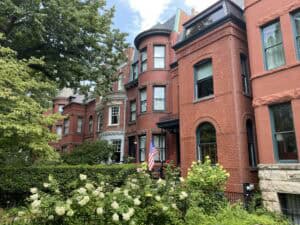
Historic DC rowhouses carry decades of craftsmanship, repairs, and architectural detail in every brick façade.
A homeowner calls about brick repair on their DC rowhouse, expecting the problem to be fairly contained. It looks like a repair job, and in some cases, that is exactly what it turns out to be. Other times, an evaluation uncovers a façade that has been repaired repeatedly over the years, with old patches, replaced brick, recessed mortar joints, and materials that were not well suited to the original masonry.
The surprise is not always the condition itself, but how much of the building’s past work has a bearing on what happens next. A repair that made sense years ago may no longer be performing well, and the newest area of deterioration might be only one visible part of a larger problem. For homeowners in this position, historic masonry restoration in Washington DC enters the discussion for the first time. That doesn’t mean the building has suddenly become a restoration project, just that the usual repair approach no longer addresses the full condition of the masonry.
What Makes Masonry Restoration Different From Standard Repair
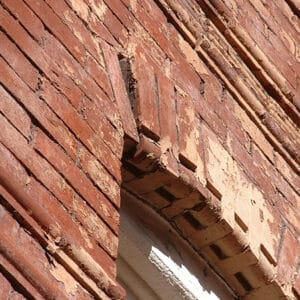
Deteriorated brick and mortar around a window opening show why an older facade may require more than a single spot repair.
Standard masonry repair might be exactly what an older building needs when the condition is limited and well defined. A damaged brick is replaceable, deteriorated joints can be repointed, and a small area of failed masonry can be repaired without turning the project into a larger undertaking. Historic restoration becomes a broader exercise in coordinating those individual repairs with the character and performance of the existing masonry.
That consistency matters when a building has several types of deterioration or a long record of alterations. Mortar, brick, patches, and replacement materials need to be considered together so that one repair does not create an incompatibility beside another. A restoration scope therefore brings several forms of masonry work under one plan, with each treatment selected for its location, material, and condition. The result is not necessarily more work; it is a more deliberate relationship between the repairs that are actually needed.
Why This Distinction Matters in DC
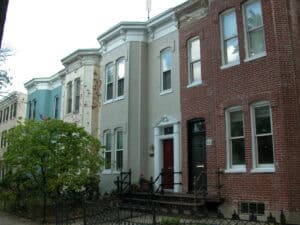
Washington, DC rowhouses reflect the architectural variety that makes masonry restoration a building-specific undertaking.
Historic DC rowhouses do not all present the same masonry conditions. An early Georgetown house might have Flemish-bond brick and splayed stone lintels, while many late-19th-century Capitol Hill rowhouses were built with pressed brick and increasingly intricate brickwork. In Dupont Circle, Queen Anne and Richardsonian Romanesque rowhouses brought cut-brick corners, elaborate brick ornament, terra cotta, and heavier masonry into the streetscape.
Those details are part of what a restoration project has to work with, not simply decorative elements that can be treated the same way on every building. They also provide clues about the building’s original construction and the kind of work that has been carried out on it over time. A restoration project on an ornate Dupont Circle facade, for example, may involve concerns that don’t come up on a rowhouse with a more straightforward brick facade.
When Previous Repairs Become Part of the Problem
Decades of repair work can leave a historic facade with a mix of original masonry and later interventions that are not always easy to identify at first glance. A replacement brick may differ subtly from the surrounding wall, an old mortar repair may sit beneath a newer one, or a previous patch may conceal the condition of the masonry around it. Sorting through those layers helps establish what is original, what has already been altered, and where the current deterioration is actually occurring.
When Is Restoration the Right Scope?
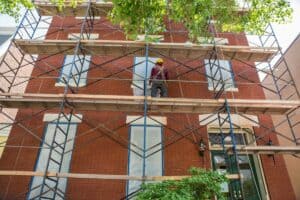
A broader masonry project may call for full access to the façade, especially when deterioration extends across multiple areas.
A wall covered with failed patches, replacement bricks, and repeated repointing points to a more complicated history than one with a single damaged area. The same is true when mortar joints have deteriorated across several elevations or years of water intrusion have affected the brickwork. In each case, the visible damage represents a larger body of work, and addressing only the newest failure may leave the rest of the facade untouched.
Pre-renovation is another point at which a restoration evaluation makes sense, since planned construction may expose or conceal masonry conditions that need to be addressed first. A pre-sale evaluation serves a similar purpose by documenting the state of the masonry before the property changes hands. For an older building that has gone 20 years or more without masonry work, a current evaluation also establishes what has changed and whether the next project calls for targeted repairs or a more comprehensive scope.
The Role of Preservation Standards in DC
Preservation standards can influence how masonry work is planned on a historic DC property. The Secretary of the Interior’s Standards emphasize retaining historic materials and character, repairing significant features where feasible, and using compatible materials when replacement is necessary. Depending on the property and proposed work, DC’s historic preservation review process may also apply to exterior work requiring a building permit, particularly for properties in designated historic districts.
What a Restoration Assessment Covers
A restoration assessment takes in portions of a building that are easy to miss from street level, with RenDev examining accessible elevations, upper brickwork, mortar joints, window and door openings, chimneys, rooflines, staining, and evidence of earlier repairs. Cracked or displaced brick, recessed joints, patched sections, and changes in the masonry from one area to another are all noted as part of the evaluation.
Photographs, measurements, access conditions, landscaping, adjacent surfaces, and scaffolding requirements are also documented alongside the masonry, with notes on areas where moisture intrusion is suspected and any site conditions that could affect the work. That record gives RenDev the information needed to write a restoration scope that accounts for the actual work area, rather than focusing only on the deterioration that first caught the homeowner’s eye.
A Better Way to Approach Historic Masonry Restoration in Washington DC
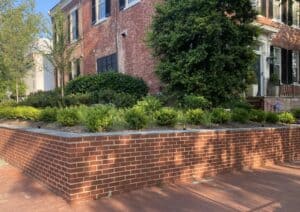
Close-up of a brick wall with well-maintained landscaping and historic masonry details.
Sometimes the question is not whether your brick needs work, but whether the next repair should be approached differently. When an older building has accumulated years of repairs, deterioration, or moisture-related problems, historic masonry restoration in Washington DC may provide the right framework for deciding what comes next.
Renaissance Development can evaluate your property, document the existing conditions, and develop an appropriate restoration scope based on what the building actually needs. Visit our page on historic masonry restoration or contact us for a free estimate to discuss your DC masonry project.
Frequently Asked Questions
What is the difference between masonry restoration and masonry repair?
Repair addresses a specific visible problem, such as a damaged brick or failed mortar joint. Restoration takes a broader view, considering the condition of the masonry, previous repairs, and related areas of deterioration. Historic masonry restoration in Washington DC may bring several types of repair together under one scope.
Which DC neighborhoods have historic masonry restoration needs?
Capitol Hill, Georgetown, Dupont Circle, Logan Circle, and Columbia Heights have large concentrations of historic rowhouses, many dating to the late 19th and early 20th centuries. Their age and histories of previous repairs can create a range of masonry conditions, so restoration needs vary by property.
Does my DC property need to comply with historic preservation requirements?
Properties in designated DC historic districts and other protected properties may be subject to historic preservation review for exterior work requiring a building permit. Requirements depend on the property and proposed work.
How do I know if my building needs restoration rather than targeted repair?
Widespread mortar deterioration, multiple failed or incompatible prior repairs, a significant history of moisture intrusion, or decades without masonry work can all justify a broader evaluation. The appropriate scope depends on the building’s actual condition.
How long does a historic masonry restoration project take?
Project duration depends on the building size, number of elevations, access conditions, extent of deterioration, and scope of work. An evaluation provides a better basis for discussing the expected project timeline.
Disclaimer: Every effort is made to ensure the accuracy of the information in this article. Please credit rendevdc.com when sharing and reposting.


