






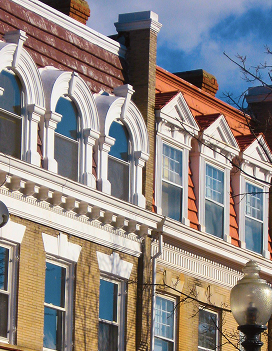

A beautifully restored historic brick building featuring detailed masonry and vibrant landscaping around the entrance.
Washington is known for its extensive collection of nineteenth- and early twentieth-century brick rowhouses. Although architectural details vary across the city, these buildings share an important characteristic. The mortar binding the masonry together has a shorter service life than the brick itself. That is not a defect; it is how traditional masonry was intended to function.
When mortar begins to crack, recede, or fall away, many property owners assume the brick itself is failing. Rather, the mortar has simply reached the point where replacement is expected. Addressing that deterioration before moisture reaches deeper into the wall helps preserve the original masonry and may reduce the need for more extensive repairs later.
Before scheduling a repair, it helps to know what signs indicate that a Washington, DC rowhouse may need tuckpointing. Historic buildings respond differently than modern masonry, and repair methods should reflect the materials originally used to construct them. This article focuses on recognizing mortar deterioration, understanding when an evaluation is warranted, and how proper tuckpointing fits into historic masonry care. For an overview of Renaissance Development’s professional tuckpointing and brick repointing services, see our dedicated service page.
What Is Tuckpointing?
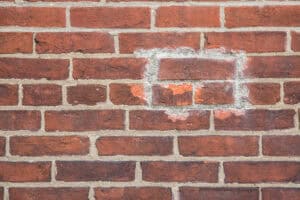
A section of historic brickwork after localized tuckpointing to replace deteriorated mortar.
Tuckpointing is the removal of deteriorated mortar from the joints between brick units and its replacement with new mortar that matches the physical properties of the original material. The repair restores the wall’s ability to resist water penetration while allowing the masonry to continue expanding, contracting, and drying as intended.
Composition, strength, and vapor permeability all influence how the repaired wall will last over time. We regularly evaluate rowhouses where isolated repairs have been completed over several decades using different mortar mixes. Mortar that is harder than the surrounding material can concentrate stress in adjacent areas, while softer repairs may weather at a different rate than the original joints. A thoughtful tuckpointing project handles those inconsistencies so the repaired areas perform more uniformly with the original construction.
Why DC Rowhouses Are Especially Vulnerable
Age alone does not determine the condition of Washington’s buildings. Most rowhouses were built with solid masonry walls, lime-based mortar, and comparatively soft brick. Each material was selected to work together, creating a wall capable of managing moisture and accommodating slight movement without damaging the units. That relationship changes when repairs are made with products that behave differently. The way a building sheds water plays a role in where mortar begins to deteriorate. Chimneys, parapets, cornices, and exposed upper walls experience greater weathering than protected sections closer to grade.
Sun exposure, roof drainage, previous repairs, and ongoing maintenance are other factors that affect how quickly mortar deteriorates. For that reason, the condition of the masonry is often a better guide for repair decisions than the building’s age alone.
Seasonal weather in Washington places repeated demands on historic masonry throughout the year. Mortar absorbs moisture during periods of rain and humidity, then releases it as conditions become drier. During winter, moisture remaining in deteriorated joints expands as it freezes, gradually enlarging existing voids and opening additional pathways for water intrusion.
What Happens When Mortar Fails
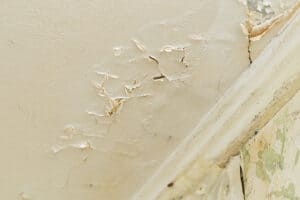
Peeling paint and damaged plaster can be early signs of moisture moving through masonry walls.
Interior signs of deterioration often show before it is obvious on the exterior. Damp plaster, peeling paint near masonry walls, or recurring moisture at window openings can all trace back to failed mortar joints.
As the mortar wears, the wall begins to absorb more moisture than it was designed to handle. In some cases, dissolved salts migrate to the surface and leave behind visible white deposits. When they continue to open, the pathways for moisture become more direct, allowing water to move deeper into the wall with less resistance. Not every symptom points to mortar deterioration by itself. Similar conditions can result from roof leaks, failed flashing, or other sources of moisture. Looking at the wall as a whole helps determine whether deteriorated mortar is contributing to the problem.
Once brick begins to crack or spall, repair becomes more complex. Mortar replacement is considered routine maintenance for historic masonry, while replacing original brick is generally a more involved restoration. Delaying tuckpointing increases the likelihood that both will be required.
What Proper Tuckpointing Involves
Before any mortar is removed, the repair approach should be based on the existing masonry. That includes figuring out the extent of deterioration, determining whether previous repairs should be removed, and confirming that surrounding brick is sound enough to support new mortar. Once the repair scope has been defined, deteriorated mortar is carefully removed from the joints without damaging the surrounding brick. Creating a clean, stable surface allows the replacement mortar to bond properly and perform as part of the existing wall.
That is when the new mortar is installed. Matching the strength, composition, and appearance of the original mortar helps the repaired sections perform consistently with the surrounding masonry. The final step is finishing the joints to complement the original profile and texture. Joint profile enhances appearance and how water sheds from the wall, making it an important part of a long-lasting repair. If damaged brick is uncovered during the work, those areas should also be fixed before the project is considered complete.
Why Material Compatibility Matters
A frequent assumption is that harder mortar provides a longer-lasting repair. Historic masonry does not behave that way. Compatibility involves more than matching color. The replacement mortar should respond to moisture, temperature changes, and normal weathering in the same manner as the existing materials. That allows the repaired joints to age alongside the surrounding masonry rather than placing additional stress on it. Washington’s older buildings were built with a lime-based mortar that allows movement and moisture transfer through the wall assembly.
Portland cement can change that balance. Many modern Portland cement mortars are significantly harder and less permeable than traditional lime-based mortar, which can transfer stress into surrounding brick and limit drying potential within the wall. We frequently see cases where cement-based repairs remain intact while nearby brick begins to deteriorate. The issue is not usually the repair itself, but the change in how the wall responds to moisture and movement. Selecting compatible materials is not an aesthetic decision. It determines how the masonry will age after restoration.
How to Know if Your Rowhouse Needs Tuckpointing
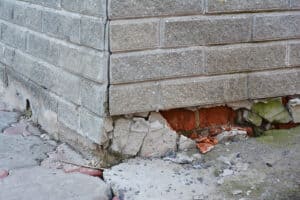
Close-up of deteriorated brick masonry with cracks and missing mortar, highlighting the need for restoration.
Recessed joints, missing mortar, and powdery or loose material are frequent indicators of deterioration. Cracks that follow mortar joints or white surface deposits, often called efflorescence, may also be a sign that moisture is moving through the masonry.
These conditions do not always occur evenly across a façade. Upper walls, chimneys, and exposed sections often show wear first. On the interior, damp plaster or peeling paint near masonry walls can reveal that mortar failure is happening from the outside.
Not every crack or area of missing mortar requires immediate repair, but these changes are worth monitoring as they develop. An evaluation helps identify whether the mortar has simply reached the end of its service life or if other conditions, such as moisture entering from above, are contributing to the deterioration.
How to Choose a Tuckpointing Contractor in DC
Contractors should be familiar with lime-based mortar systems and older Washington construction methods. A thorough evaluation explains not only what repairs are recommended, but why they are appropriate for your particular building. Historic rowhouses rarely benefit from one-size-fits-all solutions, so contractors can tell how the building’s age, materials, and condition influenced their recommendations.
Repair recommendations should reflect the building’s condition rather than a standard approach. Material selection, joint profile, and the condition of the surrounding brick are all things that need to be considered when developing a repair strategy. Past project examples, photographs of completed work, and a clear explanation of the proposed repair strategy can provide insight into how a contractor handles historic masonry restoration.
What to Expect From the Process
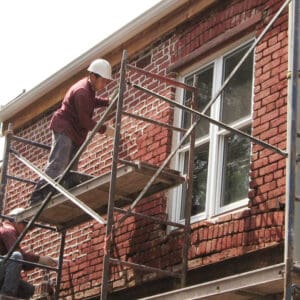
Skilled mason restoring the brick facade of a historic building, showcasing traditional tuckpointing techniques.
Most tuckpointing projects begin with a site visit to evaluate the masonry and the extent of work needed. The proposal will explain the recommended repairs, the materials to be used, and any access requirements so you understand how the repair strategy relates to your building’s condition before work begins.
Historic rowhouses frequently require scaffolding to safely reach upper walls, chimneys, or parapets. Protective coverings are installed where needed to limit dust and protect windows, landscaping, walkways, and other nearby surfaces while repairs are underway.
As work progresses, conditions that were not visible from the surface may occasionally be uncovered after deteriorated mortar is removed. When that happens, the repair plan should be reviewed with the property owner before more work is completed.
Project length depends on the amount of deteriorated mortar, weather conditions, and additional brick repairs that become necessary after work begins. For buildings located within a historic district, permit or review requirements may also affect the schedule. Throughout the project, homeowners should receive updates about progress, scheduling, and any conditions that could change the scope of work.
Tuckpointing Washington DC Historic Homes: Final Notes
Historic masonry was designed to be maintained over time rather than replaced all at once. As mortar reaches the end of its service life, replacing it with materials similar to the original construction preserves both the appearance and long-term durability of the wall.
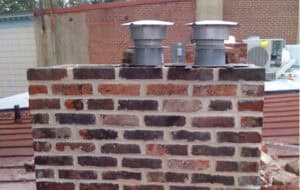
Close-up of a historic brick chimney showcasing tuckpointing and modern vent caps.
No two Washington, DC rowhouses age in the same way. That is why a careful evaluation should come before selecting replacement materials or defining the scope of work. At Renaissance Development, we approach tuckpointing as part of a broader preservation strategy for older brick buildings. Our recommendations are based on the existing masonry, the building’s construction, and the performance of the repair over time. If you’ve noticed deteriorating mortar or other signs of masonry wear, we’re happy to evaluate your building and discuss the most appropriate next steps.
Frequently Asked Questions
What is the difference between tuckpointing and repointing?
For most residential masonry projects, the terms are used interchangeably. Both describe the removal of deteriorated mortar from brick joints and its replacement with new mortar compatible with the existing masonry.
How do I know if my DC rowhouse needs tuckpointing?
Recessed joints, cracking along mortar lines, loose or powdery mortar, and white surface deposits are common indicators. Interior moisture near masonry walls can also point to deterioration.
How long does tuckpointing last?
The service life of tuckpointing depends on the building’s exposure to weather, the condition of the existing masonry, and the materials used during the repair. When compatible materials and proper workmanship are used, tuckpointing can perform well for decades before additional maintenance is needed.
Can I use regular cement mortar on my historic brick home?
Many modern Portland cement mortars are significantly harder and less permeable than the lime-based mortars traditionally used in historic Washington buildings. Using an incompatible mortar can transfer stress to the surrounding brick and reduce the wall’s ability to dry properly over time.
What should I know about tuckpointing Washington DC rowhouses?
Washington, DC rowhouses were commonly built with solid masonry walls, softer brick, and lime-based mortar that were intended to work together. Successful tuckpointing considers the building’s original materials, previous repairs, and current condition before selecting a repair approach.
How much does tuckpointing cost in Washington DC?
Cost depends on the size of the repair area, accessibility, condition of the masonry, and whether brick repair is required alongside mortar replacement. A site evaluation is typically needed to determine the appropriate scope of work before an accurate estimate can be provided.
Can tuckpointing be done in any season?
Tuckpointing can be performed during much of the year, but temperature, moisture, and weather conditions might have an affect on successful installations. Scheduling depends on the specific project and the conditions needed for the mortar to cure properly.
Disclaimer: Every effort is made to ensure the accuracy of the information in this article. Please credit rendevdc.com when sharing and reposting.


