






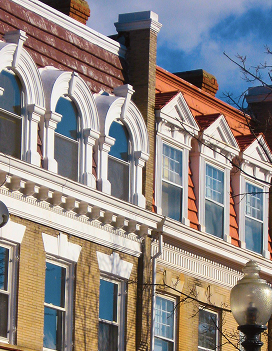

Many of Washington, DC’s historic rowhouses rely on well-maintained mortar joints to protect their original brickwork from decades of weather exposure.
Most homeowners notice something is wrong with their brickwork before they know what to call it. Crumbling mortar, white staining, loose bricks, and damp walls are all potential signs your DC rowhouse needs tuckpointing. Those changes are easy to dismiss as ordinary aging, even though they may indicate mortar that has reached the end of its service life.
On historic Washington, DC rowhouses, mortar is designed to wear more quickly than the surrounding brick. That sacrificial role protects the masonry, but it also means the joints eventually reach a point where they should be renewed. Catching mortar deterioration early keeps repairs smaller than waiting until moisture has spread farther into the wall.
Visible Signs on the Exterior
Crumbling, Recessed, or Missing Mortar Joints
Mortar joints should sit close to the face of the brick, not deep below it. As the mortar wears away, the joints become recessed, crumbly, or disappear altogether. Those open gaps leave the brickwork more exposed to rain and allow moisture to reach deeper into the masonry.
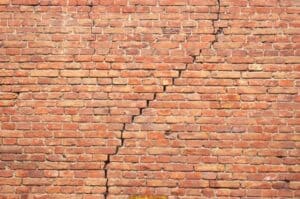
Close-up of a cracked brick masonry wall, suggesting that tuckpointing and restoration are needed.
Cracks Around Windows, Doors, and Rooflines
Windows, doors, and rooflines experience slight movement as temperatures change. Fine cracks in the mortar are common on older buildings, but wider gaps or joints pulling away from the surrounding brick are signs that the mortar is no longer performing as intended.
White Staining (Efflorescence)
White, chalky deposits on brick are called efflorescence. The staining itself is harmless, but it forms when water carries naturally occurring salts through the masonry and leaves them behind as the surface dries.
Dark Streaking or Discoloration
Dark streaks or patches usually develop where moisture lingers on the surface. Dirt, algae, and airborne pollutants collect more readily in damp areas, making discoloration easier to spot. Viewed alongside the condition of the mortar, those stains can provide insight into how moisture is moving through the masonry.
Loose or Shifting Bricks
Bricks should remain firmly bonded within the wall. Even slight movement might mean the surrounding mortar has deteriorated enough that it no longer holds the brick securely in place. Repairing a few loose bricks is far less involved than rebuilding a larger section of masonry after additional damage develops.
Interior Signs That Point to Exterior Masonry Problems
Damp Walls
Interior walls next to exterior brick are expected to remain dry under normal conditions. Persistent dampness in the same area may point to moisture moving through the masonry, although plumbing leaks and other building conditions are also possible.
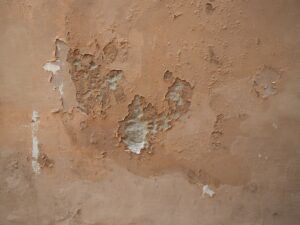
Bubbling and peeling paint on an interior wall can mean that moisture is moving through the masonry rather than remaining outside.
Recurring Moisture or Mold Near Exterior Walls
Cleaning away mold without eliminating the source rarely solves the problem for long. When mold keeps returning along an exterior brick wall, moisture entering through deteriorated mortar becomes a likely possibility.
Bubbling or Peeling Paint on Interior Walls
Paint that bubbles, peels, or separates from the wall often reflects moisture trapped beneath the surface. Damage appearing directly behind exterior brick is another clue that water may be traveling through the masonry rather than staying outside.
The Age Factor
Many Washington, DC rowhouses still contain original mortar that has weathered for decades. Even when the brickwork appears sound from a distance, years of exposure to rain, freeze-thaw cycles, and seasonal temperature changes gradually wear away the joints.
A rowhouse that is 50 years old or older and has never undergone masonry restoration is most likely in need of a masonry inspection, particularly when recessed joints, cracks, or other signs of mortar deterioration are already present. In some cases, the joints remain in good condition. In others, renewing the mortar is the next step in protecting the original brickwork from further moisture exposure.
What Happens If You Wait?
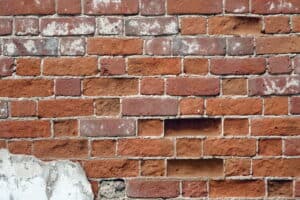
A historic brick wall with white efflorescence, deteriorated mortar joints, and displaced bricks shows advanced masonry deterioration.
Stage 1: Mortar Joints Deteriorate
Small gaps and recessed joints expose more of the masonry to rain and seasonal weather.
Stage 2: Moisture Moves Deeper Into the Wall
Open joints allow water to penetrate farther into the wall assembly, especially during repeated freeze-thaw cycles.
Stage 3: Bricks Begin to Loosen or Spall
As moisture and weathering continue, bricks may loosen, shift, or begin losing their outer surface.
Stage 4: Interior Damage Appears
Water entering through the masonry can eventually contribute to damp walls, peeling paint, or recurring moisture problems inside the home.
Stage 5: Structural Problems Become More Likely
When mortar deterioration continues unchecked for years, sections of masonry can lose stability as bricks loosen and movement increases. At that point, repairs may extend well beyond tuckpointing and involve rebuilding damaged portions of the wall.
Stage 6: Repair Costs Continue to Climb
What began as deteriorated mortar may eventually require brick replacement, partial rebuilding, or more extensive masonry restoration. Repair costs rise as more of the masonry becomes affected.
When It Is an Emergency vs. When You Have Time
The severity of a masonry problem depends on more than its appearance. Worn mortar typically leaves time to schedule an inspection, while loose or unstable masonry needs faster action because it presents a safety risk.
Schedule an Inspection
- Recessed or crumbling mortar

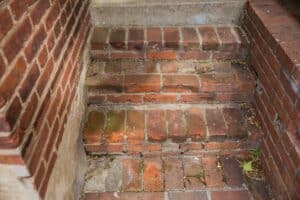
Loose bricks, deteriorated mortar joints, and vegetation growing between the bricks are signs that masonry repairs should not be postponed.
- Hairline cracks in mortar joints
- White staining (efflorescence)
- Dark streaking or discoloration
- A few loose bricks without significant movement
Seek Immediate Attention
- Bricks that have fallen from the building
- A chimney that is leaning or shedding masonry
- A wall that appears to be bulging outward
- Large cracks accompanied by noticeable movement
- Loose masonry above sidewalks, entrances, or other occupied areas
Next Steps After Seeing the Signs Your DC Rowhouse Needs Tuckpointing
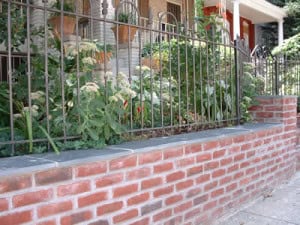
Expert masonry work showcasing brick and mortar restoration on a residential garden wall.
Waiting for mortar to fall out completely means the repair cannot be fixed by simple tuckpointing anymore. A masonry inspection while the joints are still intact gives you a much better chance of limiting the work to the mortar rather than replacing damaged brick.
The signs your DC rowhouse needs tuckpointing are not always dramatic, but they are much easier to address before moisture leads to more extensive masonry damage. Renaissance Development provides preservation-minded tuckpointing for historic Washington rowhouses, with repair strategies tailored to the condition of the original masonry. Learn more about our tuckpointing services or request a free estimate to discuss your property.
Frequently Asked Questions
What does failing mortar look like?
Crumbling, recessed, cracked, or missing mortar joints are some of the clearest signs your DC rowhouse needs tuckpointing. You may also notice white staining, dark streaking, loose bricks, or moisture appearing inside the home.
Can interior damp walls be caused by failing mortar on the outside?
Yes. When mortar joints fail, water can enter the wall and eventually appear as moisture on interior surfaces. The source is often the exterior masonry rather than a plumbing issue.
How old does a DC rowhouse have to be before tuckpointing is likely needed?
Many DC rowhouses are 80 to 120 years old. A building that has never had masonry work, or last had it completed more than 20 to 30 years ago, is more likely to have mortar joints ready for inspection.
Is white staining on brick a sign of a serious problem?
Efflorescence, the white salt deposits that appear on brick, indicates that moisture is moving through the masonry. While the staining itself is not harmful, it signals that the source of the moisture should be identified.
What happens structurally if tuckpointing is deferred too long?
Water entering through deteriorated mortar joints can damage interior finishes, contribute to mold growth, and gradually affect the stability of load-bearing masonry. Repair costs also rise as more of the masonry becomes affected.
Disclaimer: Every effort is made to ensure the accuracy of the information in this article. Please credit rendevdc.com when sharing and reposting.


