






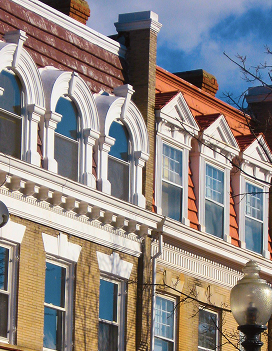
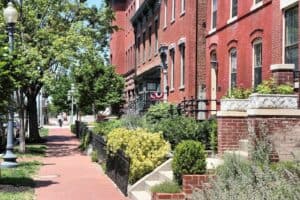
Historic brick rowhouses in Washington, DC require preservation-minded brick repair to maintain their appearance and long-term stability.
Searching for brick repair in Washington, DC usually starts with a visible problem. You might notice loose bricks, crumbling mortar, cracks, or pieces of brick collecting below an exterior wall. While those signs are easy to spot, deciding how to repair them is not always as straightforward.
Brick repair and historic masonry restoration are closely connected, but they serve different purposes. Replacing damaged brick addresses the visible deterioration, while historic masonry restoration takes a broader look at the condition of the masonry and the factors contributing to the damage. On Washington’s older brick buildings, that distinction matters because lasting repairs begin with a careful assessment of the masonry, not just the damaged area.
What Is Brick Repair?
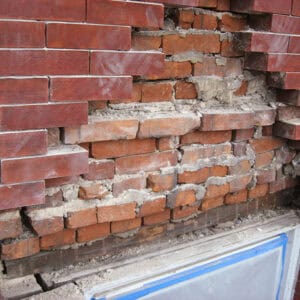
Historic brick wall with extensive brick deterioration, missing bricks, and failed mortar joints requiring structural brick repair.
Brick repair focuses on replacing masonry units that have deteriorated beyond repair. A brick might need to be replaced because it has cracked, begun to spall, shifted out of position, or lost enough material that it no longer performs as intended. The goal is to restore the strength and appearance of the surrounding masonry while matching the existing brick as closely as possible.
Brick replacement is typically more than a standalone service. Damaged bricks are found alongside deteriorated mortar joints, making repointing a natural part of the repair. In other situations, the mortar remains in good condition, and only a few isolated bricks need to be replaced.
What Is Historic Masonry Restoration?
Historic masonry restoration considers the condition of the entire masonry wall, not just the damaged brick. The process examines the brick, mortar, signs of moisture intrusion, previous repairs, and other conditions that contribute to deterioration. Looking at the masonry as a whole reduces the chance of repairing visible damage while the underlying cause remains.
On older DC buildings, restoration also focuses on preserving the original character of the masonry. That means selecting replacement materials that are compatible with the existing brick and mortar, respecting established preservation standards, and correcting the conditions that led to the damage in the first place.
Why Historic Buildings Require a Different Approach
Washington, DC’s historic rowhouses were commonly constructed with relatively soft, vapor-permeable brick and lime-based mortar. Those materials share moisture and movement in ways that differ from many modern masonry products. These buildings also rely on load-bearing masonry walls, meaning the brick itself plays an important structural role.
Using modern materials that are harder than the original masonry can introduce unnecessary stress. Mortars that are too strong may cause brick damage, while incompatible repairs trap moisture within the wall and accelerate deterioration. Lasting repairs come from selecting materials that suit the age and construction of the building instead of assuming newer products are automatically a better fit.
Common Types of Brick Damage in Washington, DC
Spalling and Flaking
Spalling occurs when the face of a brick begins to break away, leaving a rough, uneven texture. As the outer layer separates, more of the brick is exposed to weather, allowing the damage to spread.
Cracking and Displacement
Cracks can develop within individual bricks or across sections of masonry. Bricks may also shift out of alignment, creating uneven joints or visible movement in the wall. The cause might not be obvious from the exterior, making a closer inspection important before repairs begin.
Efflorescence and Staining
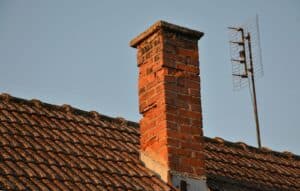
A deteriorated historic brick chimney with mortar loss and damaged masonry that should be evaluated before repairs become more extensive.
A white, powdery residue on brick is commonly known as efflorescence. It forms when water carries naturally occurring salts to the face of the masonry. Other stains may indicate ongoing moisture intrusion or long-term material reactions rather than simple discoloration.
Water Damage and Freeze-Thaw Deterioration
Brick naturally absorbs water. During freezing weather, that moisture expands as it turns to ice. Repeated freeze-thaw cycles add stress on brick and mortar, increasing the likelihood of cracks, spalling, and mortar loss.
Failed Prior Repairs
Older buildings sometimes contain repairs completed with materials that were not well suited to the original masonry. Hard cement patches, incompatible mortar, or poorly matched replacement bricks can place stress on surrounding materials, allowing existing damage to continue or new problems to develop nearby.
The Relationship Between Mortar Failure and Brick Damage
Mortar cushions the edges of the surrounding brick while filling the joints between masonry units. As those joints begin to recede, crack, or wash away, more water reaches the brick and exposes it to weather. The effects of this are not always immediate. Repeated wetting and freeze-thaw cycles gradually wear away the face of the brick, widen existing cracks, and weaken nearby masonry. What starts as worn mortar can eventually progress to damaged brick.
That is why brick replacement and repointing are so closely connected. Replacing damaged brick without repairing deteriorated mortar allows the same pattern of deterioration to continue.
What Proper Brick Repair Involves
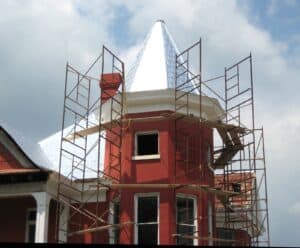
Renovation of a historic brick building with scaffolding and a pointed roof.
Quality brick repair includes more than removing a damaged brick and installing a new one. The replacement brick should match the original in size, color, texture, and overall appearance so the finished work blends naturally with the surrounding masonry.
Mortar selection matters just as much. Historic buildings perform best when the mortar suits the original brick rather than overpowering it. Finally, brick replacement involves removing damaged units without harming the surrounding masonry. On older buildings, careless removal techniques can chip adjacent brick or enlarge the opening, making it more difficult to achieve a clean, well-matched repair. Careful workmanship during removal and installation is just as important as selecting the correct replacement materials.
Common Brick Repair Mistakes to Avoid
Brick damage can have more than one cause, and the same repair method is not right for every situation. Focusing only on the visible damage or selecting materials that do not suit the original masonry can allow problems to continue after the project is complete.
- Covering damaged brick with mortar instead of replacing it. Applying mortar over deteriorated brick does not restore the original masonry and usually fails as the underlying brick continues to break down.
- Using hard cement mortar on older brick. Historic masonry was typically constructed with softer materials than those used today. Mortar that is too hard can put unnecessary strain on the surrounding brick.
- Replacing only the damaged brick without inspecting nearby masonry. Crumbling mortar, moisture intrusion, or earlier repairs may have contributed to the damage. Looking at the surrounding masonry provides a more complete basis for the repair.
- Assuming every crack or stain has the same cause. Similar symptoms can develop for different reasons, making a site evaluation an important step before selecting a repair method.
Preservation Standards and Historic Properties
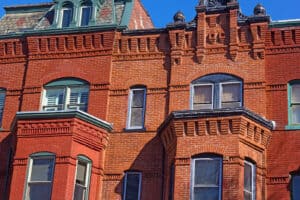
Historic brick architecture in Washington, DC reflects the craftsmanship and masonry details that preservation standards are intended to protect during restoration projects.
Many older buildings in Washington, DC are located within historic districts or are otherwise subject to preservation review. In those situations, the Secretary of the Interior’s Standards for the Treatment of Historic Properties provide widely recognized guidance for protecting original materials while allowing necessary restoration.
The standards encourage retaining original masonry whenever practical, replacing deteriorated materials only after repair is no longer feasible, and selecting methods that respect the building’s architectural character. Those principles serve as a valuable framework while allowing the scope of work to reflect the conditions found on each property.
How to Evaluate the Scope of Work
A masonry evaluation examines more than the bricks showing visible damage. It considers how far the deterioration extends, what is causing it, and whether similar conditions are present in nearby areas.
This also includes looking at mortar joints, checking for moisture intrusion, noting movement or displacement in the wall, reviewing earlier repairs, and determining whether the damage is isolated or more widespread. Those findings inform the recommended work, including brick replacement, repointing, or other restoration measures.
For older Washington, DC buildings, a clearly defined scope protects both the masonry and the homeowner. It limits unexpected discoveries once the project is underway and creates a clearer plan for completing the restoration.
Brick Repair Washington DC: Choosing the Right Approach
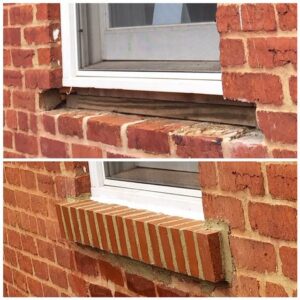
Replacing deteriorated brick beneath a window opening restores proper support while maintaining the appearance of the original masonry.
The right repair is not always the one that replaces the most brick. Lasting results come from recognizing how the brick, mortar, moisture, and previous repairs have influenced one another before any work begins.
If you are researching brick repair in Washington, DC, for a historic rowhouse or commercial property, Renaissance Development offers brick repair and historic masonry restoration tailored to older masonry buildings. Contact us today to schedule a free estimate and discuss your project with our team.
Frequently Asked Questions
What is the difference between brick repair and tuckpointing?
Tuckpointing addresses failing mortar joints. Brick repair focuses on damaged or deteriorated bricks themselves. The two are often needed together because mortar failure typically leads to brick damage over time.
Can damaged historic bricks be matched and replaced?
Yes, though matching historic brick requires care. The replacement brick should be compatible in size, hardness, and appearance with the original. Using modern hard brick in an older soft-brick wall can create additional problems.
What causes brick to crack or spall on DC rowhouses?
The primary cause is moisture penetration combined with freeze-thaw cycles. Water enters through failed mortar joints, saturates the brick, freezes, and causes the brick face to break away. Incompatible mortar repairs can accelerate this process.
Do DC historic properties have preservation requirements for masonry repair?
Properties in DC historic districts may be subject to review under preservation guidelines. The Secretary of the Interior Standards for Rehabilitation provide a framework for appropriate repair methods. Renaissance Development is experienced working within these requirements.
When should I schedule brick repair Washington DC services instead of tuckpointing?
A site evaluation is the most reliable way to determine the scope of work. Visible brick damage, including spalling, cracking, or displacement, usually indicates that brick repair is needed alongside or in addition to mortar work.
Disclaimer: Every effort is made to ensure the accuracy of the information in this article. Please credit rendevdc.com when sharing and reposting.


