







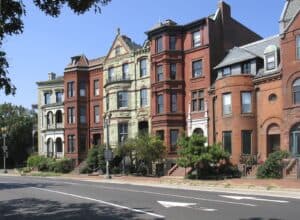
A row of beautifully restored historic brick buildings showcasing detailed masonry and tuckpointing work in an urban setting.
How much does tuckpointing cost in Washington, DC? It is one of the first questions homeowners ask, and the answer depends on the property. Historic masonry repairs vary according to the building’s condition, repair area, access, materials, and related masonry work. This article focuses specifically on the factors that affect tuckpointing cost. If you are researching the actual service and repair approach, see Renaissance Development’s tuckpointing and brick repointing service.
In our experience restoring older DC rowhouses, two homes that appear nearly identical from the sidewalk can require varying scopes of work once the masonry is evaluated. Factors such as deteriorated mortar, damaged brick, accessibility, and other considerations influence the repair strategy and overall cost. Understanding what drives those differences can help you evaluate estimates more confidently and know what to expect before your project begins.
Why Online Tuckpointing Price Ranges Can Be Misleading
Many online articles make tuckpointing seem like a project with a single average price. In reality, the scope of work has a significant influence on cost. Localized repairs on one section of a wall, repointing an entire façade, and restoring a deteriorated chimney are all tuckpointing projects, but they involve different amounts of labor, materials, access, and planning.
Older Washington, DC rowhouses also need repair strategies tailored to the condition of the masonry rather than a predetermined price range. That’s why an on-site evaluation provides a far more reliable basis for an estimate than a broad online price range.
Factors That Affect Tuckpointing Cost
Size of the Repair Area
The amount of deteriorated mortar is one of the most obvious cost considerations, but it isn’t measured simply by the size of the wall. Tuckpointing is performed within the mortar joints, so the total length of joints being repaired changes the amount of labor and material involved. A small area with widespread mortar deterioration may call for more extensive repairs than a much larger section with only isolated damage.
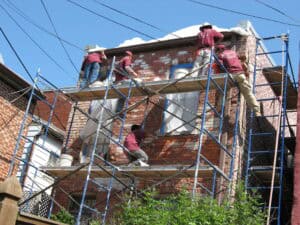
Masonry restoration crew performing tuckpointing on a multi-story historic brick building from scaffolding in Washington, DC.
Accessibility and Scaffolding
How easily a repair area can be reached also plays a role. Ground-level repairs are more straightforward than work on upper-story façades, chimneys, or areas that involve scaffolding or other specialized access equipment.
Extent of Deterioration
Not every wall with deteriorated mortar is in the same condition. During an evaluation, we also look for loose mortar, open joints, moisture-related deterioration, and other signs that may point to additional masonry repairs. More extensive deterioration typically demands a broader repair approach than localized tuckpointing alone.
Brick Repair
Tuckpointing restores deteriorated mortar joints, but the surrounding brick is also evaluated as part of the project. Bricks that have cracked, become loose, or begun to spall may need to be repaired or replaced. Restoring both the mortar and the brick preserves the masonry as a complete system.
Permit Requirements
Some masonry projects in Washington, DC, may need permits depending on the scope of repairs, the property, or local regulations. Permit requirements can add steps to the planning process and may extend the project timeline.
Mortar Specification
Selecting the appropriate mortar is just as important as replacing the deteriorated joints. Many older Washington, DC, buildings require lime-based mortar that matches the original masonry, while newer buildings may use different mortar specifications. Choosing materials that are appropriate for the building helps support long-term performance while protecting the original brick.
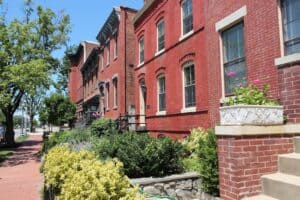
Compatible masonry repairs help protect the character of historic DC rowhouses.
Why Tuckpointing in Washington May Cost More Than National Averages
National pricing averages don’t always account for the conditions commonly found in DC. Much of the city’s housing stock consists of older brick rowhouses, many of which require preservation-minded repair methods and materials that differ from those used on newer masonry buildings.
With historic masonry restoration, you need specialized knowledge and craftsmanship. That includes selecting compatible mortar, preparing joints carefully, and using repair techniques appropriate for older brick buildings. Skilled craftspeople with experience restoring historic masonry help set these projects apart from standard repairs.
Project logistics can also factor into the overall cost. Scaffolding is often needed for multi-story rowhouses, and narrow alleys, limited access, or closely spaced buildings. The accessibility of the site makes setup and material movement more involved than on properties with open work areas.
The Cost of Waiting
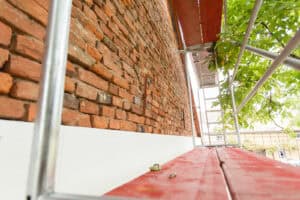
Bulging brickwork on a historic masonry wall highlights how prolonged moisture intrusion and deteriorated mortar can allow sections of the wall to shift over time.
Tuckpointing is intended to restore deteriorated mortar before more extensive masonry repairs become necessary. When mortar joints remain open for an extended period, water can continue entering the wall, increasing the likelihood of additional deterioration over time.
One of the advantages of addressing mortar deterioration early is that repairs may be limited to the mortar joints themselves. As moisture continues through the surrounding masonry, however, bricks can begin to crack, loosen, or spall. Repairing or replacing damaged brick then involves more labor and materials. In many cases, restoring deteriorated mortar joints before the brick is affected is a smaller, more straightforward project than replacing damaged brick after the deterioration has spread.
Not every building follows the same timeline, and not every area of deteriorated mortar will lead to widespread brick damage. An evaluation can determine if the repairs are still limited to tuckpointing or if additional masonry restoration should be considered.
What to Expect From a Free Tuckpointing Estimate
A free estimate is more than a quick look at deteriorated mortar. During the evaluation, we inspect the visible condition of the masonry, search for signs of moisture intrusion, review prior repairs, consider access needs, and identify any related conditions that may influence the restoration approach. The goal is to understand the building before recommending any work.
After the evaluation, you’ll receive a detailed written proposal outlining the recommended scope of work. Depending on the project, that proposal may include the areas of masonry to be restored, access or scaffolding needs, permit considerations, brick repair recommendations, and the general approach to completion. A clearly defined proposal describes what is being recommended and why.
You’ll also have an opportunity to ask questions about the findings and suggested repairs. We want to help you make an informed decision with a clear understanding of your building’s condition and the work being proposed, whether the project involves localized tuckpointing or a broader masonry restoration.
Tuckpointing Cost in Washington, DC: Request Your Free Estimate
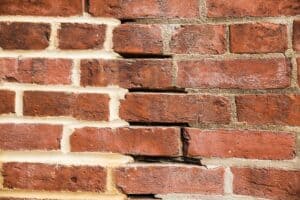
Historic brick masonry showing tuckpointing and cracks, highlighting the need for restoration.
Questions about tuckpointing cost in Washington, DC, are best answered with a professional evaluation rather than a broad online price range. That evaluation provides the information needed to compare options, prioritize repairs, and move forward with reassurance that your property is being taken care of.
Our tuckpointing services explain how we restore deteriorated mortar on older brick buildings in greater detail. When you’re ready to discuss your property, contact us to schedule your free estimate.
Frequently Asked Questions
Why does tuckpointing cost in Washington, DC vary so much from quote to quote?
The amount of work involved, accessibility, material specifications, and the extent of deterioration all affect the cost. A quote without a site visit is not a reliable estimate.
Is tuckpointing cheaper than replacing brick?
In many cases, yes. Addressing deteriorated mortar early can help prevent brick damage that typically involves more extensive repairs.
Does tuckpointing require permits in Washington, DC?
Permit needs depend on the scope of the repairs and the property. Renaissance Development handles permit requirements as part of the project process.
How do I get an accurate tuckpointing estimate in DC?
The only reliable way is through a site visit. We evaluate the condition of the masonry before providing a written proposal.
Does the type of mortar affect the cost?
Yes. Lime-compatible mortar for historic buildings requires more careful specification and application than standard modern mortar.
Disclaimer: Every effort is made to ensure the accuracy of the information in this article. Please credit rendevdc.com when sharing and reposting.


