






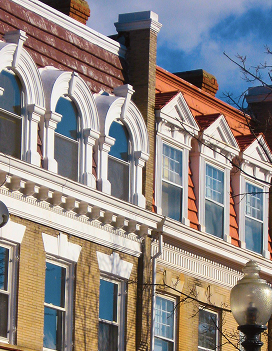

Beautiful brickwork gives a rowhouse much of its character, but even well-maintained masonry may need an occasional touch-up.
See a cracked or crumbling brick on your DC rowhouse? Naturally, the next question is, “How much is this going to cost?” The answer to brick repair cost in Washington DC depends on more than counting damaged bricks. Matching the existing masonry, accessing the repair area, addressing surrounding mortar, and defining the full extent of deterioration all factor into the final scope.
That is why a proper evaluation matters. A few damaged bricks might only call for a straightforward repair, while the visible problem may be part of a larger masonry issue that needs attention. So, what actually goes into that number?
What Different Brick Repair Projects Can Involve
Brick repair projects range from a single replacement to restoration across a substantial portion of a wall. The size of the project changes the amount of labor, material sourcing, access, site protection, and related masonry work included in the estimate.
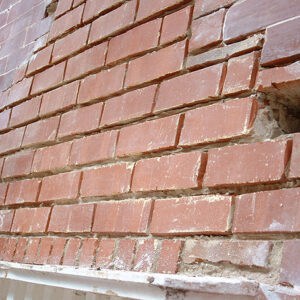
Spalling brick can extend beyond the visible surface, making the extent of a repair an important part of the estimate.
Single brick replacement sits at the smaller end of the scope. The work may focus on removing one damaged unit, sourcing a compatible replacement, preparing the opening, and setting the new brick with appropriate mortar. Even a small repair requires focus on size, color, texture, and joint appearance so the new material fits the surrounding wall.
Localized section repair covers a broader area where several bricks have deteriorated, or damage extends beyond an individual unit. Work may include removing multiple bricks, rebuilding part of the wall, and the nearby mortar joints. Access also becomes a larger consideration as the work moves higher on a rowhouse façade.
Full wall restoration represents a substantially broader undertaking. Depending on the building, the work might need extensive brick replacement, repointing, material sourcing, access equipment, site protection, and coordination with other restoration work. At this scale, examining the surrounding masonry is especially important because isolated damage may sit within a wider pattern of deterioration.
What Drives Brick Repair Cost in Washington, DC
Once the general size of a project is established, several details can shift the estimate. Some relate to the masonry itself, while others come from the practical conditions surrounding the work.
Number of bricks being replaced
The quantity still matters, but so does how those bricks are distributed. Replacing several adjacent units is a different task from locating individual failures across a façade, where each area requires its own preparation and finishing.
Difficulty of matching historic brick
Historic brick is not always readily available at a local supplier. An older building may contain a size, texture, or color that has little resemblance to modern products, making material sourcing a more involved part of the work.
Accessibility and scaffolding
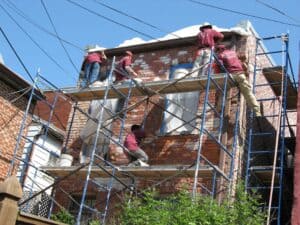
The higher the repair area, the more the work has to account for getting people and materials where they need to be.
A repair at ground level presents a very different logistical setup from one several stories above a sidewalk. The location, equipment, scaffolding, fall protection, pedestrian protection, and setup time are all part of the calculation.
Associated tuckpointing
Brick replacement does not happen in isolation from the mortar around it. Deteriorated joints in the surrounding area may also need tuckpointing or repointing, adding related masonry work to the project.
Structural versus localized repair
A localized defect may stay within a small area, while movement, displacement, or more extensive deterioration could point to a broader masonry concern. The distinction affects how the work is approached and how extensive the project becomes.
Permit requirements
The building and proposed work influence which permits or approvals apply. Historic properties and projects involving exterior alterations deserve particular attention to applicable DC requirements before work begins.
Why Historic Brick Repair Takes More Care
Historic brick repair goes beyond substituting a damaged brick with a new one. Older walls were built with materials and construction practices that differ from modern masonry, so repairs have to account for how the original assembly was made.
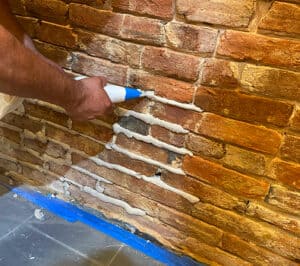
A worker restoring a historic brick wall with mortar for preservation and aesthetic enhancement.
Lime-based mortar is one example. It has properties that vary from harder cement-based mixes, so the mortar used in the repair needs to work with those properties. The same principle applies to replacement brick, where compatibility with the original wall matters more than finding a modern product that looks close enough.
That preservation-minded approach takes specialized knowledge and careful workmanship. Instead of treating historic masonry like interchangeable building material, the repair works with the existing wall and its original characteristics. For an older DC property, that distinction is part of what you are paying for.
What Happens When Brick Repair Is Delayed?
Brick deterioration rarely improves with time. Water entering through cracks, spalled faces, or open mortar joints can work its way farther into the masonry, particularly through repeated wetting and freezing cycles. The result may be damage to brick or mortar that was nonexistent when the problem was first noticed.
That creates a financial distinction between repairing a wall and rebuilding one. Replacing a limited number of bricks preserves far more of the original masonry than dismantling and reconstructing a substantial section. Not every damaged brick is headed toward a rebuild, but leaving deterioration unaddressed removes time from the equation. An evaluation gives you the chance to understand the condition while the repair is still defined by what is actually damaged, rather than by what has deteriorated since.
What Should a Brick Repair Estimate Include?
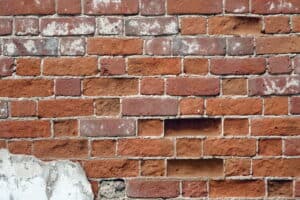
Weathered brickwork can show several signs of deterioration across the same section of wall.
A proper estimate makes the price understandable. Before putting a number to the work, the masonry should be evaluated in person so the condition, location, and extent of the damage can be assessed alongside the practical conditions at the property.
The written proposal then describes the work being recommended. That may include brick replacement, mortar work, access arrangements, site protection, or related masonry tasks, depending on what the evaluation reveals. The goal is a defined scope rather than a number with no explanation behind it.
What Goes Into Brick Repair Cost in Washington DC?
You can count the damaged bricks, measure the wall, or you can even start doing the math in your head. That won’t change how brick repair cost in Washington DC still comes down to what is happening within the masonry and what it takes to repair it properly.
For Renaissance Development, that starts with the wall itself. From a handful of replacement bricks to broader brick repair and historic masonry restoration, we look at the building itself before defining the work. Contact us for a free estimate and let’s put some actual numbers to your particular wall.
Frequently Asked Questions
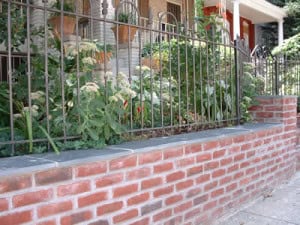
Expert masonry work showcasing brick and mortar restoration on a residential garden wall.
Why is historic brick repair more expensive than standard masonry work?
Historic brick repair requires matching original brick materials, using lime-compatible mortar, and applying preservation-minded methods that take more time and expertise than standard modern repair.
How many bricks typically need to be replaced on a DC rowhouse repair project?
It varies widely based on the history of the building and the extent of deterioration. The brick repair cost in Washington DC, also depends on the resulting scope, so a proper site evaluation is the only way to determine it accurately.
Does brick repair always require tuckpointing at the same time?
Not always, but the surrounding mortar joints should be evaluated when bricks are replaced. Deteriorated joints in the repair area may also need tuckpointing or repointing.
How do I know if I need brick repair or just tuckpointing?
If the brick face is spalling, cracking, or bricks are loose or displaced, repair is likely needed. If the damage is limited to the mortar joints, tuckpointing alone may be sufficient. A site evaluation is the best way to determine this.
What happens if I delay brick repair on my DC rowhouse?
Surface brick damage that goes unaddressed allows more water to enter the wall, which can accelerate deterioration. What begins as a repair to a few bricks can become a full section replacement if deferred too long.
Disclaimer: Every effort is made to ensure the accuracy of the information in this article. Please credit rendevdc.com when sharing and reposting.


